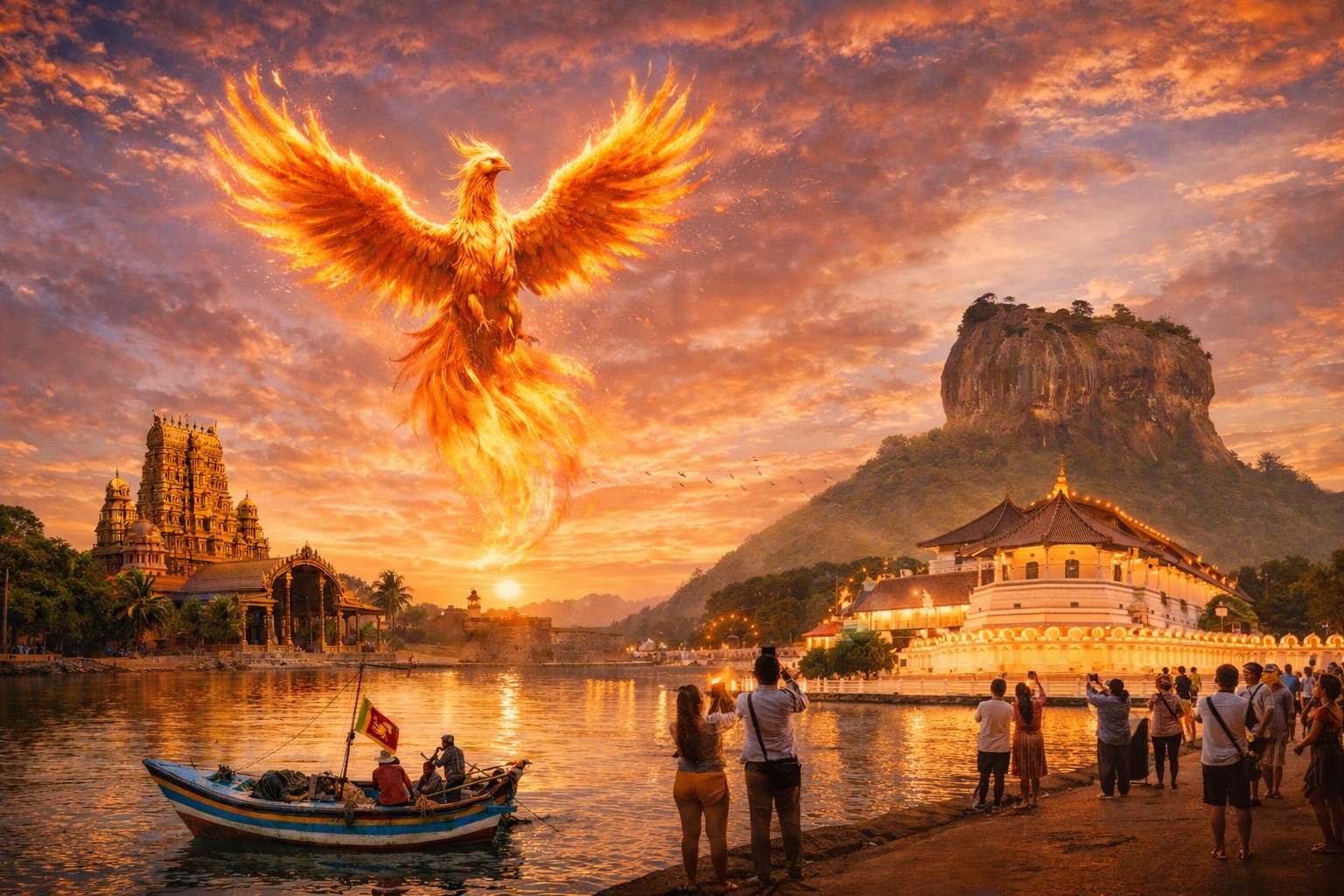
After nearly three decades of civil war ended in 2009, tourism emerged as a powerful signal that the country was open again. Visitors returned before many other sectors stabilized. Following the Easter Sunday attacks in 2019, tourism collapsed overnight, yet recovered faster than expected. The pandemic and the 2022 economic crisis again pushed the sector to the brink, but once more, tourism rose, bringing in foreign exchange, confidence, and global attention when few other engines were functioning.
The Order of the Phoenix is a name almost anyone recognizes. In the world of Harry Potter, it refers to Albus Dumbledore’s secret society formed to resist Voldemort during the darkest period of the wizarding world. The name is not accidental. A phoenix is a mythical bird known for rising from its own ashes after destruction, symbolizing hope, regeneration, courage, and the strength to face darkness rather than surrender to it. Dumbledore’s own phoenix, Fawkes, embodies loyalty and quiet power, appearing not when everything is perfect, but when hope seems lost.
Beyond fiction, the phoenix has found meaning in real-world analysis as well. In tourism and post-crisis studies, the Phoenix Tourism Theory draws from this same symbolism. It refers to the tendency of tourism to recover quickly after war, disaster, or economic collapse, often becoming one of the first visible signs of renewal.
Sri Lanka fits this phoenix pattern almost instinctively.
Recent developments illustrate this phoenix effect clearly. Jaffna, once synonymous with conflict and isolation, has been named one of the 25 best cities to visit in the world in 2026 by Lonely Planet. This recognition is more than a tourism accolade, it marks a symbolic shift. It acknowledges cultural depth, historical resilience, and Sri Lanka’s effort to promote regional diversity beyond traditional tourist centres.
Globally, Sri Lanka’s appeal continues to strengthen. Galle has secured fifth place among the world’s best honeymoon destinations in Tripadvisor’s 2026 Travelers’ Choice Best of the Best rankings, based entirely on real traveller experiences. Meanwhile, the Mastercard Economics Institute’s Economic Outlook 2026 notes a structural shift in tourism patterns, with visitor spending moving beyond traditional urban centres into emerging destinations. Together, these trends point to a tourism sector that is not only rebounding, but evolving.
At the same time, Sri Lanka has emerged as a key contributor to India’s foreign tourist arrivals over the last five years, ranking alongside major markets such as the United States, the United Kingdom, and Australia. These figures signal a broader recovery in regional mobility and highlight Sri Lanka’s growing role in interconnected South Asian tourism flows.
Tourism has the potential to move beyond familiar hotspots into the North and East, rural interiors, and community-based destinations, turning post-crisis recovery into inclusive growth. When managed carefully, tourism can serve as a mode of reconciliation, bringing people into shared spaces once divided by conflict. Visitors staying in Jaffna, experiencing Tamil culture, engaging with local businesses, or traveling through former conflict zones contribute, quietly but meaningfully, to normalization, trust-building, and economic reintegration.
Tourism carries a subtle magic of its own. It does not erase history, but it allows new stories to form. It encourages interaction where distance once existed. It creates livelihoods where silence once prevailed. Like the phoenix, its power lies not in spectacle, but in renewal.
Yet the phoenix story also carries a warning. Repeated rebirth does not automatically mean lasting strength. When tourism becomes the first solution to every national shock, deeper structural problems such as governance gaps, inequality, debt stress, risk being postponed rather than resolved. True renewal requires using tourism not merely as a symbol of recovery, but as a platform for sustainable development, local employment, and long-term social stability.
Sri Lanka’s tourism sector has proven, time and again, that it can rise from the ashes. The question now is whether this phoenix will continue to circle through cycles of crisis and recovery, or finally build something enduring from each rebirth. As even Dumbledore understood, the true power of the phoenix is not just in rising again, but in what it protects once it does.